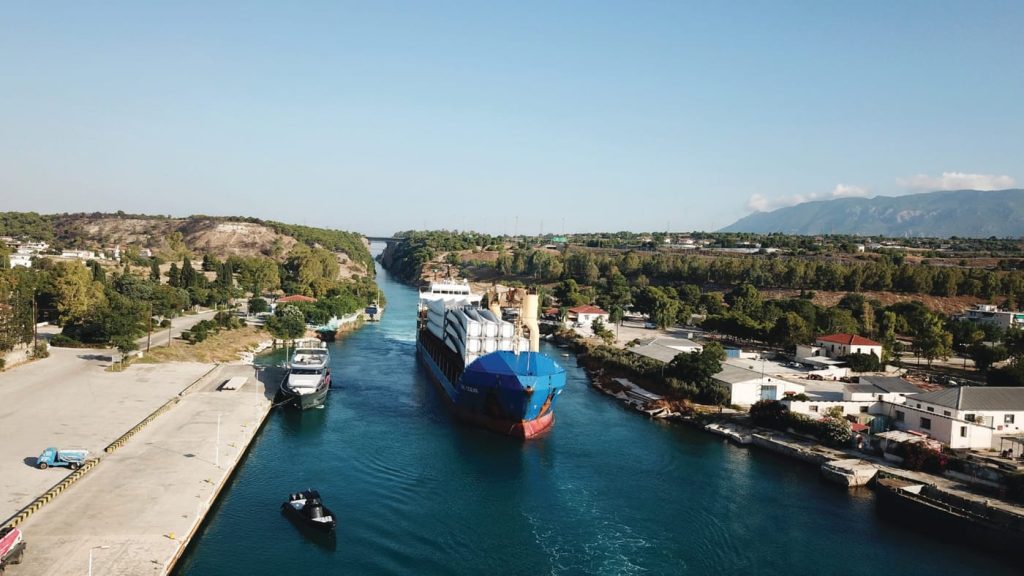
The Corinth Canal is one of the most important maritime corridors in the Mediterranean, connecting the Western Mediterranean, the Ionian Sea, and the Adriatic Sea with the Eastern Mediterranean and the Black Sea.
Thanks to its geographical location, it offers a shorter and more efficient maritime route, helping to reduce travel time, operating costs, and ships’ exposure to adverse weather conditions.
Ongoing investments in technical reinforcement, digital transformation, and advanced monitoring systems ensure high levels of safety, operational readiness, and reliability.
One of the world’s most important and historic maritime passages, which continues to be a strategic routing choice for international shipping.
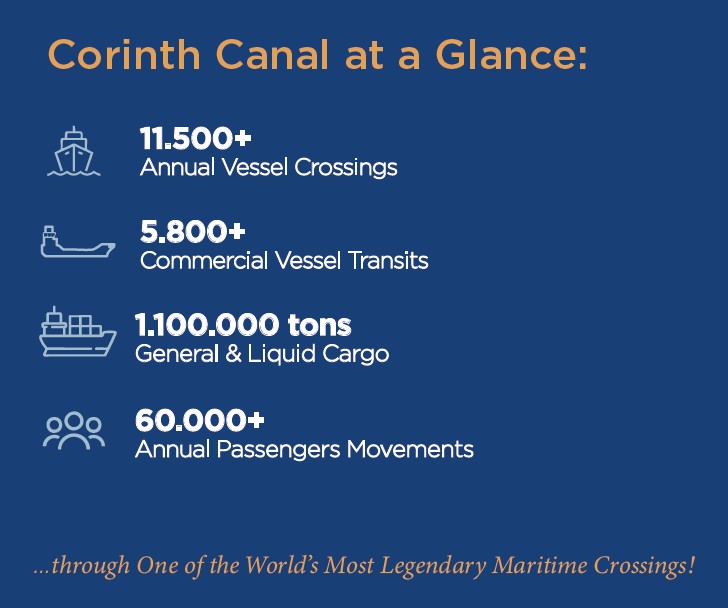
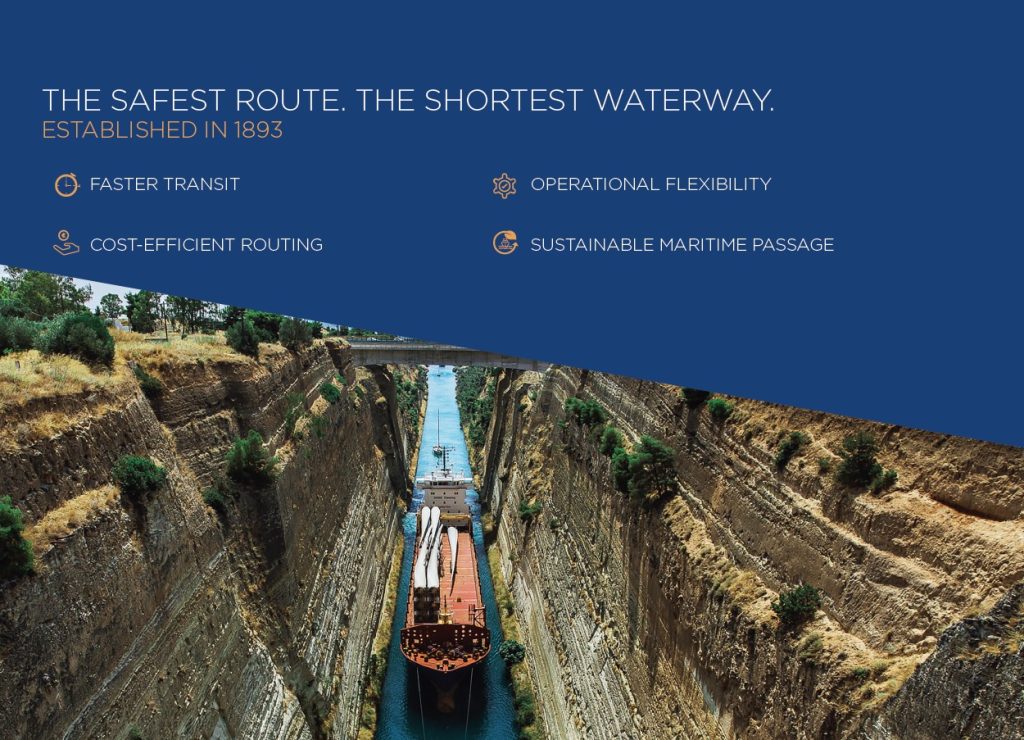
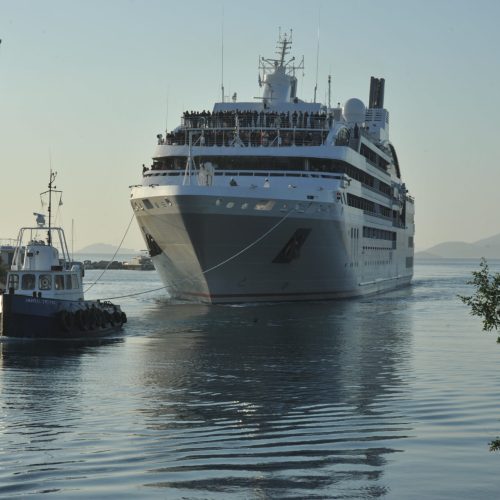
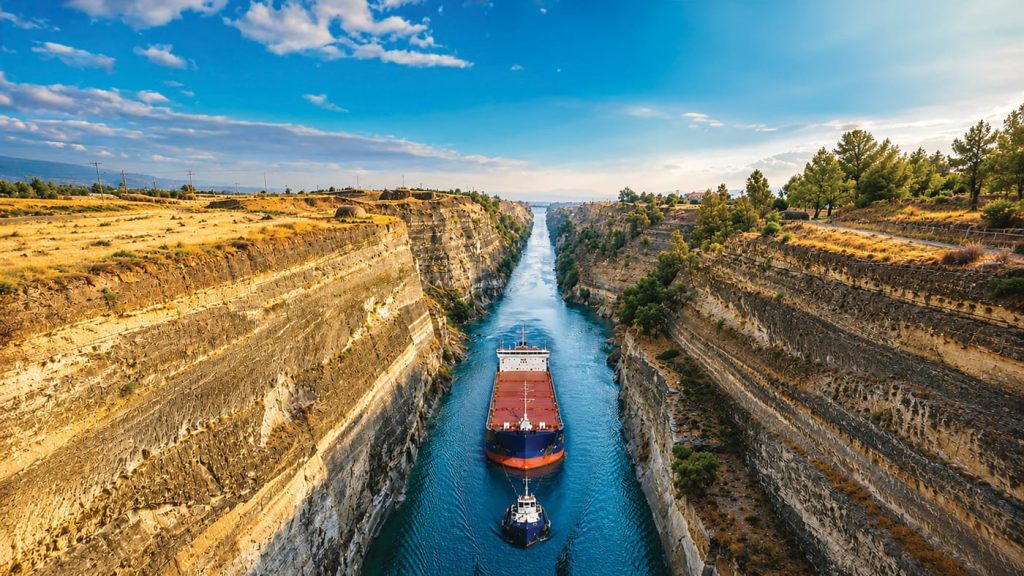
The Canal provides specialized towing and navigation services, contributing to the safe, smooth, and efficient passage of vessels.
These services are provided in accordance with the Canal’s Navigation Regulations and are supported by experienced personnel, specialized operational resources, and modern coordination procedures.
The conditions, cases of mandatory application, and operational requirements for towing and pilotage services are specified in the current Navigation Regulations.
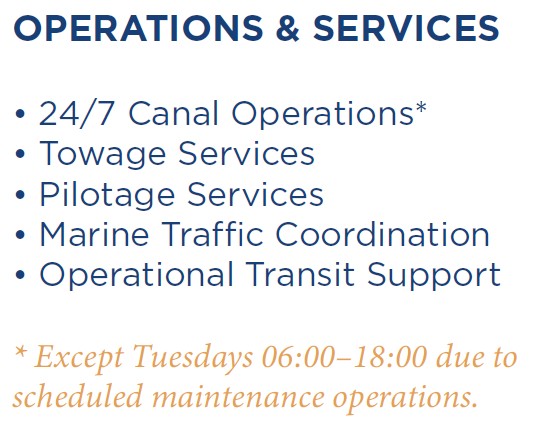
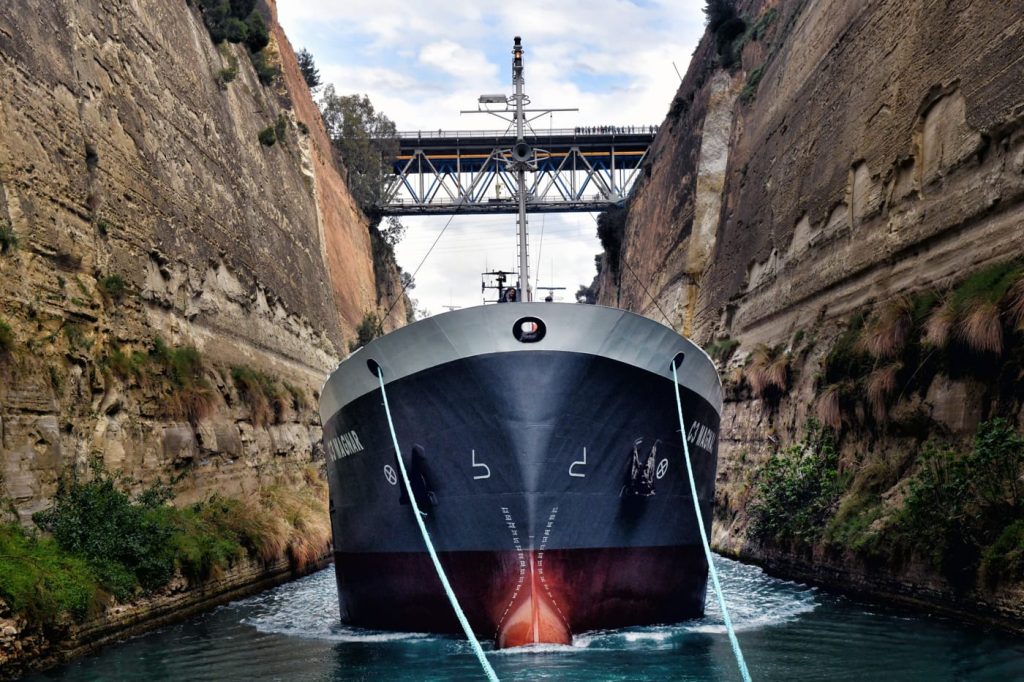
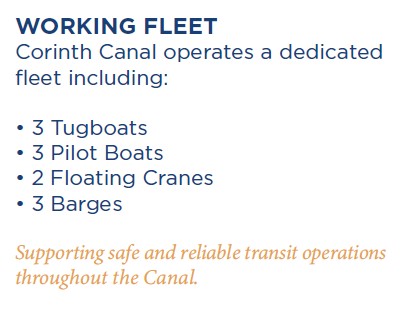
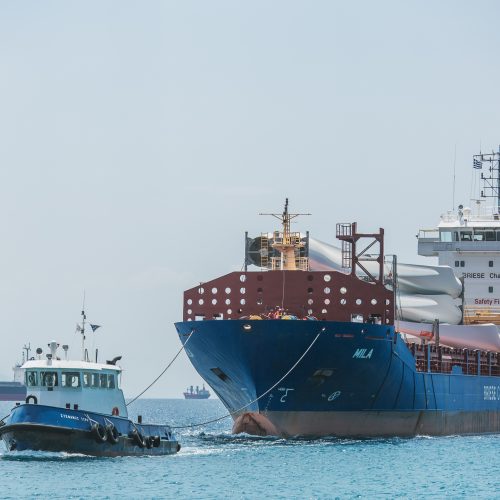
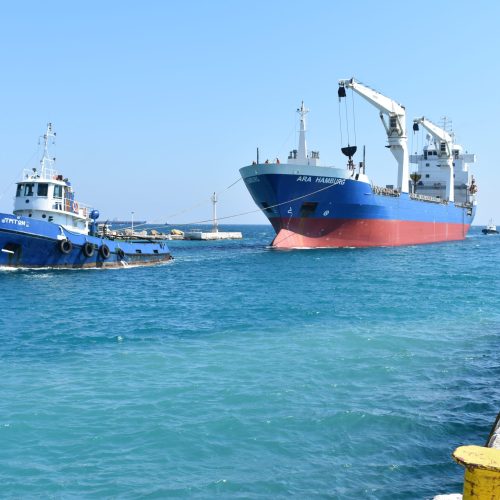
The towing service is provided by the Canal’s tugboats and is mandatory or provided at the captain’s request, in accordance with the provisions of the Navigation Regulations.
1. Towing is mandatory:
a) For sailing vessels without a propulsion engine or with a propulsion engine of insufficient power.
b) For vessels with a net tonnage of 800 koron or more.
c) For vessels with a net tonnage of less than 800 koron, if the Canal Authority determines, based on specific information, that passage without towing is unsafe.
d) For vessels carrying explosives, flammable, and generally dangerous cargoes, as well as for empty oil tankers.
2. The Canal Authority is required to provide a tugboat even to vessels with a net tonnage of less than 800 koras upon request by the captain.
3. Towing is performed using the tugboats provided by the Canal Authority for this purpose.
4. While transiting the Canal, the vessel must keep its engines running, with the primary purpose of the tow being to keep the vessel on the Canal’s axis.
5. The vessel must provide, at its own expense, the necessary towlines for towing.
The Canal’s pilots provide specialized guidance and operational support to captains during transit, drawing on their experience and knowledge of the specific conditions of the waterway.
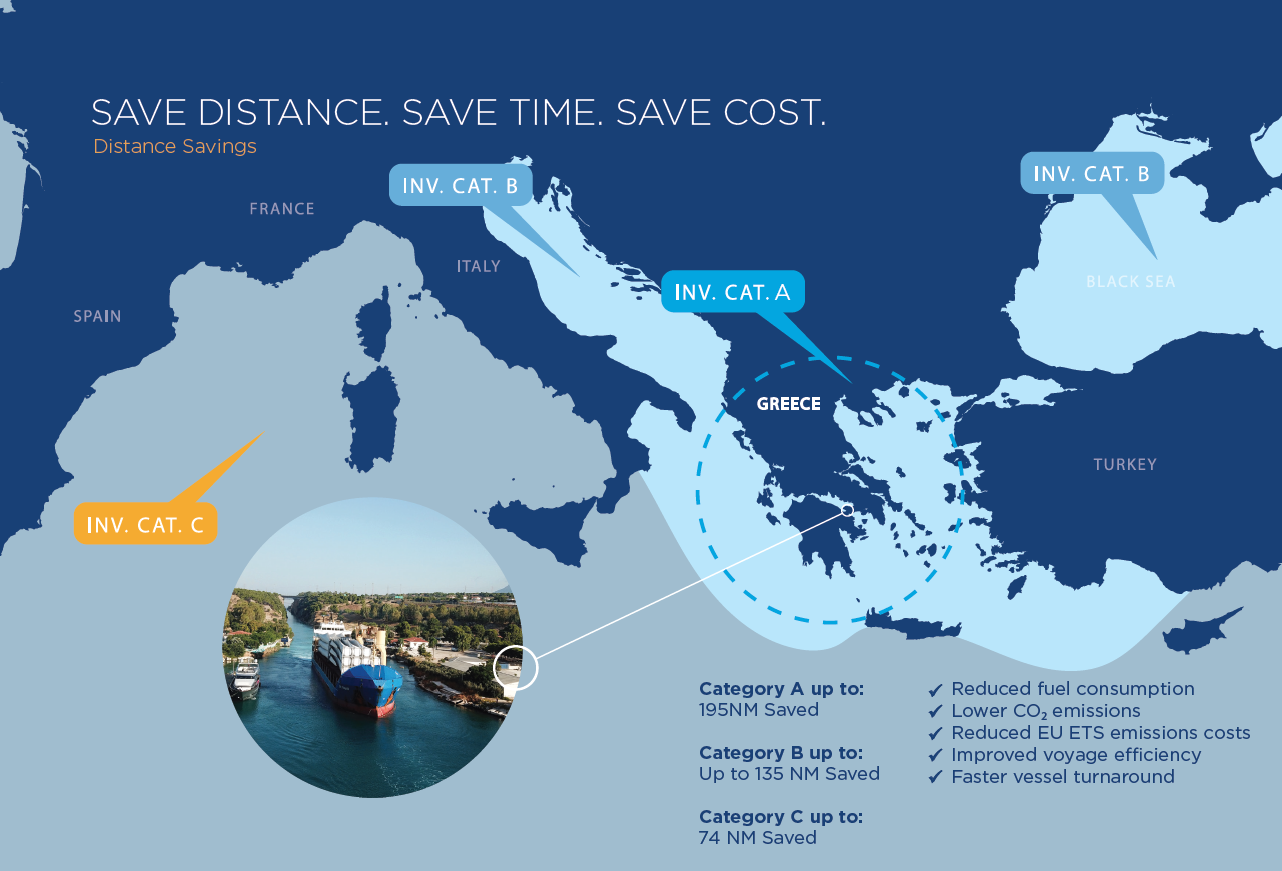
The Canal serves commercial shipping routes connecting major ports in the Mediterranean, the Adriatic, the Black Sea, and the Eastern Mediterranean.
Categories A, B, and C reflect the main geographic zones of origin and destination for ships and are used to calculate the corresponding charges and commercial incentives.
Calculation of Fees
Guide to Using Digital Services